
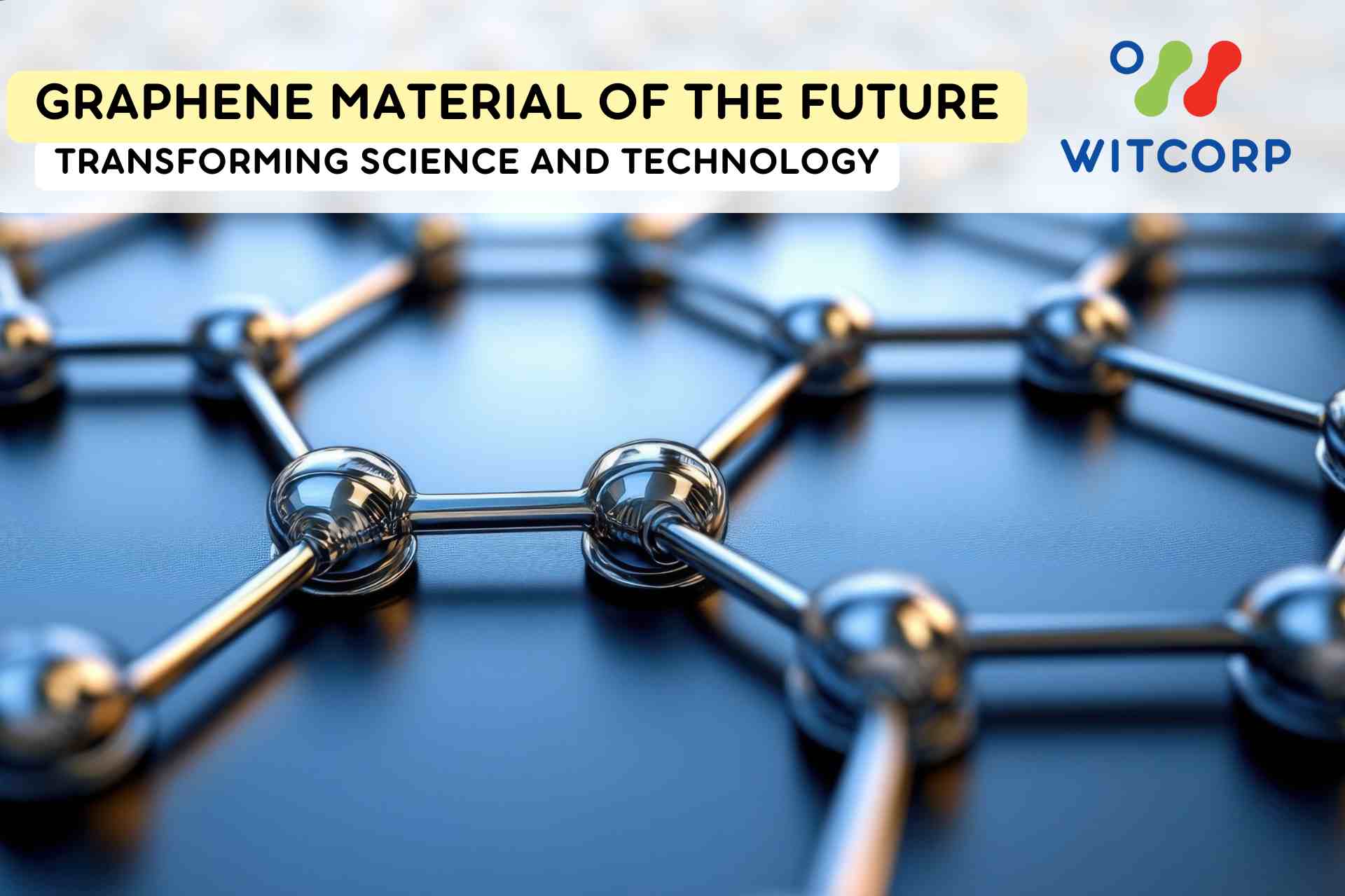
Graphene: The Material of the Future
The Graphene Material of the Future is revolutionizing science and technology in the 21st century. Since its discovery in 2004, graphene has been recognized as a wonder material with extraordinary properties, attracting global attention from researchers and industries.
What is Graphene?
Graphene is a material composed of a single layer of carbon atoms arranged in a two-dimensional honeycomb lattice. With a thickness of only 0.34 nanometers—the size of a single carbon atom—it is the thinnest material in the world.
Graphene was discovered by Professor Andre Geim and Professor Konstantin Novoselov at the University of Manchester, UK. Their groundbreaking work earned the Nobel Prize in Physics in 2010.
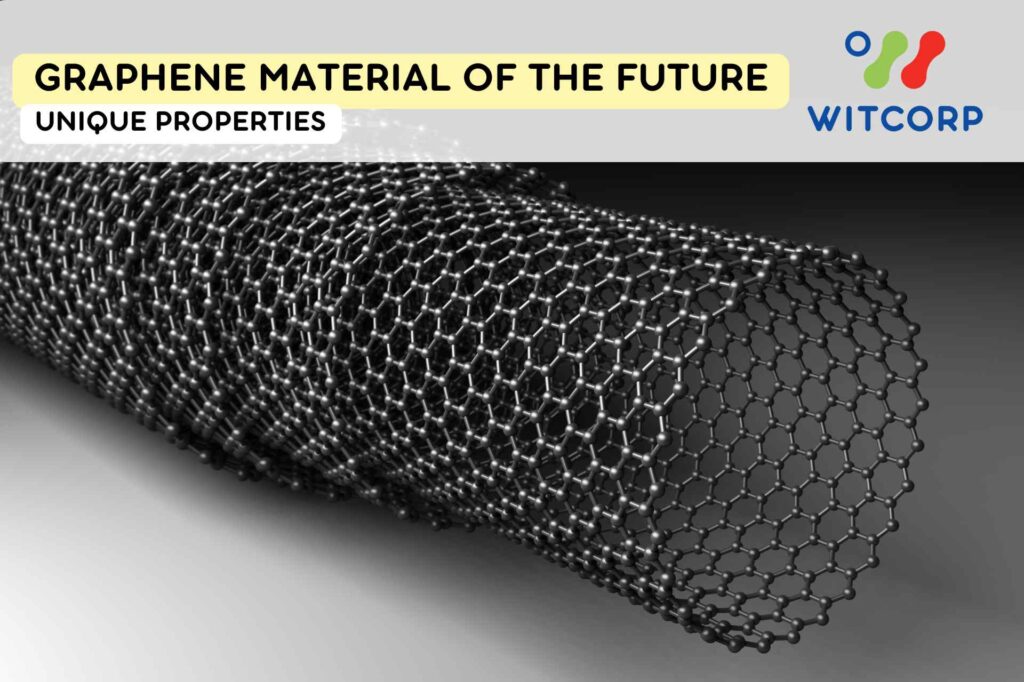
Unique Properties of Graphene
Exceptional Strength – 200 times stronger than steel of the same weight, with tensile strength of 130 GPa and Young’s modulus exceeding 1 TPa.
Outstanding Electrical and Thermal Conductivity – Electrical conductivity up to 10^6 S/m and thermal conductivity between 3,000–5,000 W/m·K, far surpassing copper.
Lightweight and Thin – A one-square-meter sheet weighs only 0.77 milligrams.
High Transparency – 97–98% transparent, ideal for electronics and display technologies.
Flexibility – Can bend and twist without losing structural integrity, suitable for flexible electronics.
Applications of Graphene: Present and Future
Energy Industry – Graphene-based lithium-ion batteries (2025) can fully charge in 5 minutes, last over 4,000 cycles, and achieve energy density of 350 Wh/kg. Carbon Nanotubes (CNTs) also play a vital role in energy storage.
Electronics and Displays – Transparent conductive films replacing ITO in OLEDs (50% cost reduction); GrapheneGPU processors reduce AI energy use by 45%; foldable smartphones and wearables.
Medicine and Biomedicine – Targeted drug delivery systems (5x efficiency); ultra-sensitive medical sensors (10^-15 M); tissue engineering and cancer treatment.
Environment and Sustainability – Seawater desalination using only 1.5 kWh/m³; air filtration and industrial separation; CO₂ conversion into valuable graphene materials.
Construction and Transportation – Composite materials for aircraft, vehicles, and buildings; thermal management for chips and smartphones; anti-corrosion coatings lasting 20–50 years.
Textiles and Apparel – Sportswear with moisture control and UV protection; smart fabrics with antibacterial properties.
Challenges and Future Outlook
Despite its potential, graphene faces challenges:
- Production Costs – In 2025, large-scale single-layer graphene via CVD costs $30–50 per m² (down from $100 in 2023), still high for mass production.
- Eco-Friendly Manufacturing – New methods include electrochemical exfoliation, laser-induced graphene, and AI-assisted defect repair.
- Quality Control – Current CVD yield is 70% (target >95%), with global standards still under development.
- Biological Safety – Nanoparticles may pose health risks; EU expects full assessment by 2025.
Graphene in Thailand
Thailand has advanced graphene technology development through NSTDA and leading universities such as KMITL, including:
- The first automated industrial-scale graphene pilot plant in Thailand.
- Synthesis technology from industrial waste gases.
- High-sensitivity printed graphene sensors.
- Technology transfer to private sector applications.
Future of Graphene Beyond 2025
Fast-charging EV batteries and foldable smartphones.
80% adoption in thermal films for flagship smartphones.
Medical approval of graphene oxide drug delivery systems for brain and pancreatic cancer.
Smart cities powered by renewable energy and graphene infrastructure.
Quantum devices: graphene in quantum computing and molecular-scale technologies.
Conclusion
Graphene is not only the material of the future but also the material of the present, already transforming industries from energy and electronics to medicine and sustainability. Ongoing advances in production technology, cost reduction, and global standards will accelerate its widespread adoption and drive sustainable innovation worldwide.
References
Bangkok Bank SME. “Graphene Battery Made by Thai People! Affordable, Fast-Charging for Electric Vehicles.” https://www.bangkokbanksme.com/en/23-8up-graphene-battery-made-by-thai-people
Electricity and Industry. (2023). “KMITL and Sun Vision Technology Welcome Senate Energy Committee to Visit Graphene Battery Innovation.” https://www.electricityandindustry.com/graphene-battery/
Bangkok Biz News. (2024). “Graphene Battery Research Reaches the Private Sector.” https://www.bangkokbiznews.com/tech/innovation/1110006
Bangkok Biz News. (2023). “KMITL Announces First Industrial-Scale Graphene Production in Thailand.” https://www.bangkokbiznews.com/tech/innovation/1059831
Mitihoon. (2025). “Sansiri and KMITL Develop Graphene-Enhanced Precast Technology for Future Construction.” https://www.mitihoon.com/2025/07/31/564425/